Victoria's Secret was started in San Francisco, California, in 1977 by Tufts University and Stanford Graduate School of Business alumnus Roy Raymond, who felt embarrassed trying to purchase lingerie for his wife in a department store environment. He opened the first store at Stanford Shopping Center in Palo Alto, and quickly followed it with a mail-order catalog and three other stores. The stores were meant to create a comfortable environment for men, with wood-paneled walls, Victorian details and helpful sales staff. Instead of racks of bras and panties in every size, there were single styles, paired together and mounted on the wall in frames. Men could browse for styles for women and sales staff would help estimate the appropriate size, pulling from inventory in the back rooms.

Photo: Meet Adriana Lima's
500 × 375 - 63k - jpg

Adriana Lima,
440 × 459 - 33k - jpg

Adriana Lima's Baby Is A
420 × 582 - 108k - jpg

Adriana Lima's Burgeoning Baby
300 × 300 - 33k - jpg

Adriana Lima Baby 267x300
340 × 381 - 172k - jpg

Adriana Lima and daughter,
400 × 295 - 40k - jpg

Adriana Lima Post-Baby Bikini
450 × 498 - 73k - jpg
In 1982, after five years of operation, Roy Raymond sold the Victoria's Secret company, with its six stores and 42-page catalogue, grossing $6 million per year, to Leslie Wexner, creator of The Limited, for $4 million. The Limited kept the personalized image of Victoria's Secret intact. Victoria's Secret was rapidly expanded into the U.S. malls throughout the 1980s. The company was able to vend a widened range of products, such as shoes, evening wear, and perfumes, with its mail catalog issued eight times annually. By the early 1990s, Victoria's Secret had become the largest American lingerie retailer, topping one billion dollars.

adriana lima burgeoning baby
849 × 1222 - 241k - jpg

Adriana Lima baby Girl
470 × 312 - 64k - jpg

Adriana Lima and Marko Jaric:
300 × 400 - 45k - jpg

What Did Adriana Lima Do to
500 × 800 - 46k - jpg

Adriana Lima Baby Bump
450 × 553 - 44k - jpg

Adriana Lima and husband,
400 × 600 - 98k - jpg

adriana lima 01 wenn2175500
299 × 480 - 53k - jpg
stupidcelebrities.net
adriana lima 01 wenn2175500
299 × 480 - 53k - jpg
stupidcelebrities.net
adriana lima 01 wenn2175500
299 × 480 - 53k - jpg

adriana lima baby
1600 × 1280 - 615k - jpg

Adriana Lima's baby
277 × 425 - 22k - jpg
##title## 

Angel-and-doves-tattoo
600 × 809 - 106k - jpg
slodive.com
Angel-and-doves-tattoo
600 × 809 - 106k - jpg

Angels Tattoo World Amp
333 × 500 - 68k - jpg

Joshua Bowers - angels and
350 × 367 - 41k - jpg

Tattoo artist: Miguel Angel
495 × 500 - 169k - jpg

Angel Sleeve Tattoos
260 × 390 - 20k - jpg

David Beckham's sleeve tattoo
336 × 255 - 29k - jpg
Since the 1990s, tattoos have become a mainstream part of global and Western fashion, common among both sexes, to all economic classes, and to age groups from the later teen years to middle age. By the 2010s, even the Barbie doll put out a tattooed Barbie in 2011, which was widely accepted, although it did attract some controversy. In 2010 around 3 in 5 (62%) of Generation Y did not have any tattoos in the United States and three-fourths (75%) of Australians under 30 did not have any tattoos.

angel sleeve front tattoo
600 × 800 - 83k - jpeg

Part Arm Sleeve Tattoos
350 × 315 - 36k - jpg

Angel Tattoo Arm Sleeve
500 × 410 - 234k - jpg

Full Angel And Roses Sleeve
600 × 360 - 27k - jpeg

Sylvia Ji sleeve tattoo (in
500 × 271 - 125k - jpg

Leg sleeve Fallen Angel TaT by
2371 × 4192 - 1373k - jpg

Part Arm Sleeve Tattoos,
436 × 575 - 64k - jpg

Sleeve Angel Tattoos
284 × 400 - 29k - jpg

Angel Sleeve Tattoo 7 Angels
400 × 600 - 132k - jpg
##title##
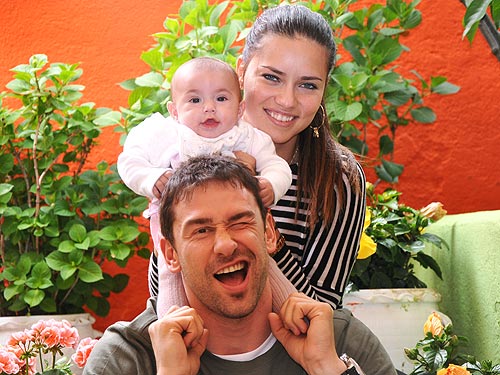
Photo: Meet Adriana Lima's
500 × 375 - 63k - jpg

Adriana Lima,
440 × 459 - 33k - jpg

Adriana Lima's Baby Is A
420 × 582 - 108k - jpg

Adriana Lima's Burgeoning Baby
300 × 300 - 33k - jpg

Adriana Lima Baby 267x300
340 × 381 - 172k - jpg

Adriana Lima and daughter,
400 × 295 - 40k - jpg

Adriana Lima Post-Baby Bikini
450 × 498 - 73k - jpg
In 1982, after five years of operation, Roy Raymond sold the Victoria's Secret company, with its six stores and 42-page catalogue, grossing $6 million per year, to Leslie Wexner, creator of The Limited, for $4 million. The Limited kept the personalized image of Victoria's Secret intact. Victoria's Secret was rapidly expanded into the U.S. malls throughout the 1980s. The company was able to vend a widened range of products, such as shoes, evening wear, and perfumes, with its mail catalog issued eight times annually. By the early 1990s, Victoria's Secret had become the largest American lingerie retailer, topping one billion dollars.

adriana lima burgeoning baby
849 × 1222 - 241k - jpg
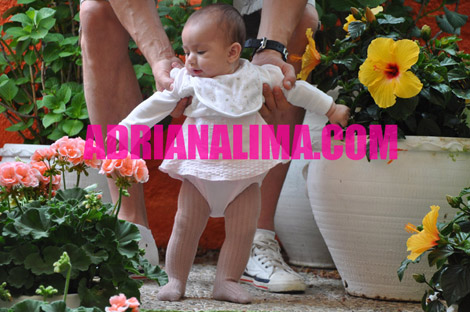
Adriana Lima baby Girl
470 × 312 - 64k - jpg
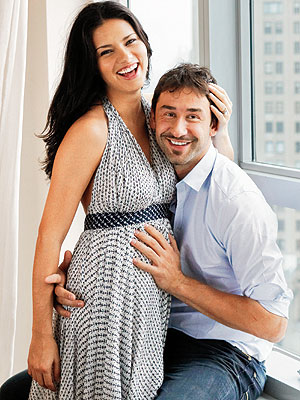
Adriana Lima and Marko Jaric:
300 × 400 - 45k - jpg

What Did Adriana Lima Do to
500 × 800 - 46k - jpg
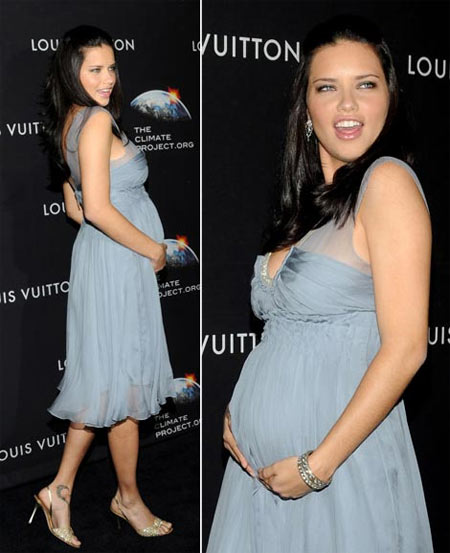
Adriana Lima Baby Bump
450 × 553 - 44k - jpg

Adriana Lima and husband,
400 × 600 - 98k - jpg

adriana lima 01 wenn2175500
299 × 480 - 53k - jpg
stupidcelebrities.net

adriana lima 01 wenn2175500
299 × 480 - 53k - jpg
stupidcelebrities.net
adriana lima 01 wenn2175500
299 × 480 - 53k - jpg

adriana lima baby
1600 × 1280 - 615k - jpg

Adriana Lima's baby
277 × 425 - 22k - jpg

sleeve tattoo angels
Tattooing has been practiced for centuries in many cultures spread throughout the world. The Ainu, the indigenous people of Japan, traditionally had facial tattoos. Today one can find Berbers of Tamazgha (North Africa), Māori of New Zealand, Hausa people of Northern Nigeria, Arabic people in East-Turkey and Atayal of Taiwan with facial tattoos. Tattooing was widespread among Polynesian peoples and among certain tribal groups in the Taiwan, Philippines, Borneo, Mentawai Islands, Africa, North America, South America, Mesoamerica, Europe, Japan, Cambodia, New Zealand and Micronesia. Indeed, the island of Great Britain takes its name from tattooing, with Britons translating as 'people of the designs' and the Picts, who originally inhabited the northern part of Britain, literally meaning 'the painted people'. British people remain the most tattooed in Europe. Despite some taboos surrounding tattooing, the art continues to be popular in many parts of the world.

Angel-sleeve-10-tattoo
500 × 398 - 169k - jpg
Angel-and-doves-tattoo
600 × 809 - 106k - jpg
slodive.com

Angel-sleeve-10-tattoo
500 × 398 - 169k - jpg

Angel-and-doves-tattoo
600 × 809 - 106k - jpg
slodive.com

Angel-and-doves-tattoo
600 × 809 - 106k - jpg
slodive.com
Angel-and-doves-tattoo
600 × 809 - 106k - jpg
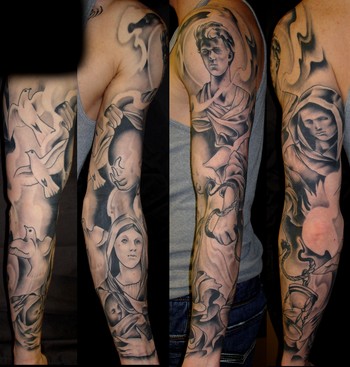
Angels Tattoo World Amp
333 × 500 - 68k - jpg

Joshua Bowers - angels and
350 × 367 - 41k - jpg

Tattoo artist: Miguel Angel
495 × 500 - 169k - jpg

Angel Sleeve Tattoos
260 × 390 - 20k - jpg

David Beckham's sleeve tattoo
336 × 255 - 29k - jpg
Since the 1990s, tattoos have become a mainstream part of global and Western fashion, common among both sexes, to all economic classes, and to age groups from the later teen years to middle age. By the 2010s, even the Barbie doll put out a tattooed Barbie in 2011, which was widely accepted, although it did attract some controversy. In 2010 around 3 in 5 (62%) of Generation Y did not have any tattoos in the United States and three-fourths (75%) of Australians under 30 did not have any tattoos.
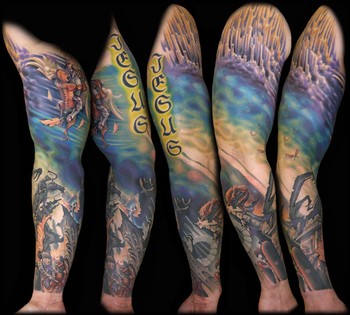
angel sleeve front tattoo
600 × 800 - 83k - jpeg

Part Arm Sleeve Tattoos
350 × 315 - 36k - jpg

Angel Tattoo Arm Sleeve
500 × 410 - 234k - jpg
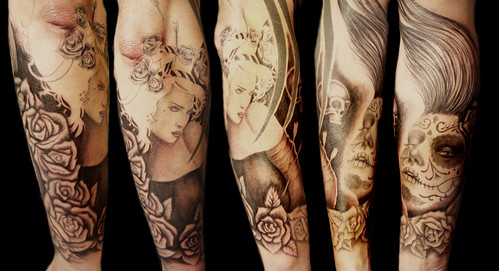
Full Angel And Roses Sleeve
600 × 360 - 27k - jpeg

Sylvia Ji sleeve tattoo (in
500 × 271 - 125k - jpg
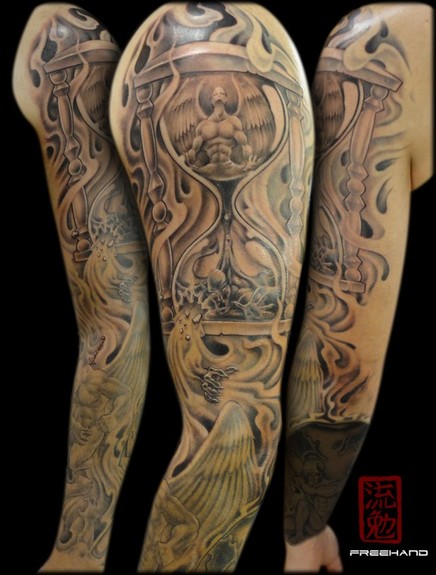
Leg sleeve Fallen Angel TaT by
2371 × 4192 - 1373k - jpg

Part Arm Sleeve Tattoos,
436 × 575 - 64k - jpg

Sleeve Angel Tattoos
284 × 400 - 29k - jpg
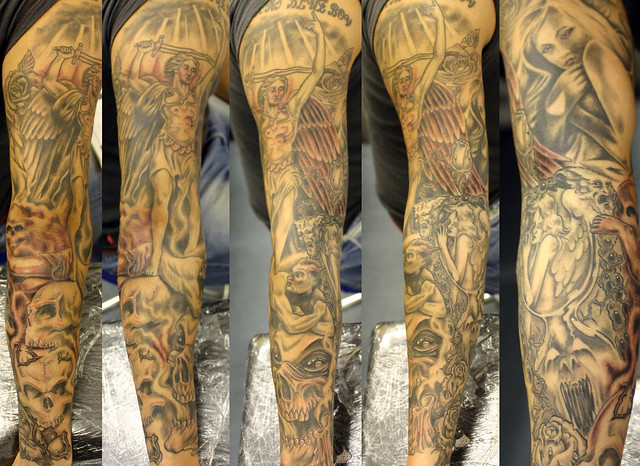
Angel Sleeve Tattoo 7 Angels
400 × 600 - 132k - jpg
tattoo images of flowers
The word can be written in several ways, each with slightly different connotations. The most common way of writing irezumi is with the Chinese characters 入れ墨 or 入墨, literally meaning to "insert ink". The characters 紋身 (also pronounced bunshin) suggest "decorating the body". 剳青 is more esoteric, being written with the characters for "stay" or "remain" and "blue" or "green", and probably refers to the appearance of the main shading ink under the skin. 黥 (meaning "tattooing") is rarely used, and the characters 刺青 combine the meanings "pierce", "stab", or "prick", and "blue" or "green", referring to the traditional Japanese method of tattooing by hand.

Tattoo Gallery - flowers
419 × 477 - 26k - jpg

Tattoo Gallery - flowers
357 × 496 - 23k - jpg

Tattoo Flower
432 × 576 - 72k - jpg

Lotus Flower Tattoo
535 × 750 - 36k - jpg

Hawaiian Flower Tattoos
520 × 371 - 36k - jpg

Tattoo Pictures Of Flowers
1235 × 1568 - 782k - jpg

Great Flower Tattoos
360 × 431 - 85k - jpg
Tattooing for spiritual and decorative purposes in Japan is thought to extend back to at least the Jōmon or paleolithic period (approximately 10,000 BC). Some scholars have suggested that the distinctive cord-marked patterns observed on the faces and bodies of figures dated to that period represent tattoos, but this claim is by no means unanimous. There are similarities, however, between such markings and the tattoo traditions observed in other contemporaneous cultures.

flower tattoos pictures
1020 × 1301 - 192k - jpg

Tattoo Flower
300 × 401 - 24k - jpg

Hawaiian Flower Tattoos
500 × 357 - 170k - jpg

Flower Tattoos
400 × 282 - 17k - jpg

Tattoo Gallery - flowers
341 × 500 - 39k - jpg

Flame tattoo of flower tattoos
400 × 513 - 43k - jpg

Hawaiian Flower Tattoos
1152 × 864 - 175k - jpg

flowers tattoo
470 × 500 - 144k - jpg

Tattoo Tattoos Flower
389 × 500 - 30k - jpg

Tattoo Gallery - flowers
419 × 477 - 26k - jpg

Tattoo Gallery - flowers
357 × 496 - 23k - jpg

Tattoo Flower
432 × 576 - 72k - jpg

Lotus Flower Tattoo
535 × 750 - 36k - jpg

Hawaiian Flower Tattoos
520 × 371 - 36k - jpg

Tattoo Pictures Of Flowers
1235 × 1568 - 782k - jpg

Great Flower Tattoos
360 × 431 - 85k - jpg
Tattooing for spiritual and decorative purposes in Japan is thought to extend back to at least the Jōmon or paleolithic period (approximately 10,000 BC). Some scholars have suggested that the distinctive cord-marked patterns observed on the faces and bodies of figures dated to that period represent tattoos, but this claim is by no means unanimous. There are similarities, however, between such markings and the tattoo traditions observed in other contemporaneous cultures.

flower tattoos pictures
1020 × 1301 - 192k - jpg

Tattoo Flower
300 × 401 - 24k - jpg

Hawaiian Flower Tattoos
500 × 357 - 170k - jpg

Flower Tattoos
400 × 282 - 17k - jpg

Tattoo Gallery - flowers
341 × 500 - 39k - jpg

Flame tattoo of flower tattoos
400 × 513 - 43k - jpg

Hawaiian Flower Tattoos
1152 × 864 - 175k - jpg

flowers tattoo
470 × 500 - 144k - jpg

Tattoo Tattoos Flower
389 × 500 - 30k - jpg
Subscribe to:
Posts (Atom)